Showing posts with label salah. Show all posts

Tuesday, October 2, 2012

LUMS Masjid

there are times when the only thing i want to hear is the recitation of Imaam sahab at LUMS Masjid. To hear him when he recites the last few verses of Surah Hashr and heart trembles despite the hangover of sins and ghaflat. SubhanAllah, what voice Allah empowers some with.
LUMS Masjid is where i learnt that there is another dimension to life, to world, to lifestyle, to every Allah ki bandi.  Ajeeb. The Masjid that is not many meters away from the rooms where the masjid is debunked, its essence disected, its existence questioned. The masjid is also only a few yards away from REDC, the space with white marble chipped in and "coveted corporates" who charge a couple of thousand dollars to tell how to balance the dunya and..the dunya. ajeeb.
In front of the masjid is the parking lot that's no its own, but reserved for the cuff-linked people at REDC and the respected faculty of LUMS. One of the tiles on the way to entrance of LADIES ONLY section is very wobbly to step at. I never knew which one it was. another tile has a little green stem with small leaves growing form underneath its odd base.
I miss LUMS Masjid.


Sunday, December 4, 2011

Friday, October 14, 2011

AllahuAkbar.

the most difficult thing for a man to do, and my Prophet, peace and blessings be upon him, did it: Realise the truth and act accordingly.

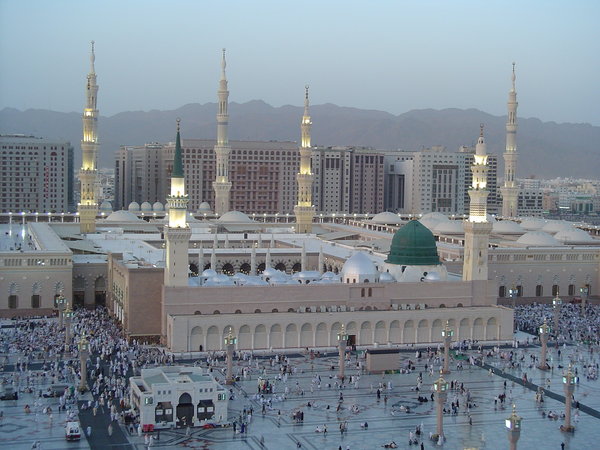
interesting article with a video from Madinah Munawwarah
http://beliefinunseen.blogspot.com/2011/10/maghrib-prayer-in-madina-and-discipline.html

Friday, October 7, 2011

I am a graduate ...?

Taken from Haq Islam.org.

A Message to University Graduates

Earlier this week I was part of a group that was invited to attend a University Graduation ceremony. Someone dear to me will also be graduating soon and some very good general advice was given at the ceremony I attended, so I decided to write this little message up to Muslim University Graduates.
Graduation day is the culmination of 3-5 years of studying a particular subject in depth at degree level. You have spent these years studying because you realise that education is a means to attaining a good career and perceive it to lead to a better way of life.

At this significant stage in your life, you are experiencing the transition from being a student through to a professional who will soon be working in the ‘real’ world. With this transition comes the need to prepare yourself in dealing with issues that may arise in the workplace, not due to trivialities such as race etc but mainly because of your religion.

Whilst many undergraduates become closer to their deen at university thanks to the efforts of ISOCs and associations, for those of us who will be going out into the workplace where their will be a minority muslim workforce or where contact with fellow muslims will be limited, it is especially vital for us to hold on to our deen; That is YOUR ISLAM.

If during your university days, you were unable to ‘get involved’ with the Muslim community, make this the starting point of change in your life.

“The one who treads a path seeking therein knowledge, Allah eases his path to the Garden.” [Sahih Muslim]

We must fully realise that our ultimate purpose in this dunya is to serve Allah Ta’ala and that our ultimate goal is to reach Jannah in the akhira (hereafter). Therefore your focus should now, be on adopting the means to achieve this eternal goal, i.e. adopting the teachings of Islam and following the Sunnah of our beloved messenger Muhammad (صلى الله عليه وسلم).

This does not mean that you have to become a hermit and retreat to some remote jungle to spend the rest of your days engaged in ibaadah. In fact we must live in the dunya but work for the akhira. What does this mean? This means that we must attempt to the best of our ability to seek deeni knowledge into at least the basic fundamentals of our religion. For example start from the basic fiqh of cleanliness and prayer and then move onto more advanced areas of the shariah such as the etiquettes of trading and business, especially for the field of work that you will soon enter into. You may also decide to study the fiqh of Nikaah and Talaaq because sooner or later if not already you will be approaching the stage where you will marry and eventually settle down with a family. These are just suggestions that hope to serve as an example of how YOU can tread that path to bring you closer to your Lord Allah Ta’ala and how you can balance the work of this world with the work of the akhira, Inshallah Ta’ala.

Whilst we have covered the importance of learning about our religion to benefit us in the hereafter, it is also necessary to learn about Islam so that we may be in a position to answer any questions that non-Muslim work colleagues may pose to us genuinely or out of curiosity.

Islam is in the spotlight; the media reports and the people see. Hence situations are bound to arise where you will be asked questions about Islam. It is therefore important that we should be equipped with the correct answers and teachings of Islam rather than substituting it with your own logic. Using your own logic in most cases will mean that you won’t be sharing the ‘true’ teachings and views of Islam and instead could be causing confusion and misinterpretation of our beautiful deen. Remember, what you say/ utter is what most people will think of Islam; so think before you speak.

Graduation also means that you have acquired a certain status in society as well as now being able to place certain letters after your name. One should, however, remember that in Islam there is no superiority of one over another except through taqwa.

“…Verily, the most honourable of you with Allah is that (believer) who has At-Taqwa. …” [Surah Hujurat V13]

Also, never look down upon anyone or let pride set into your heart as a result of your education. Any status we can obtain in the world is of no value whatsoever if Allah is displeased with us. Remember we should look at the people below us in the dunya, so that we may make shukr for what Allah Ta’ala has given us, and we should compete with the people above us in the matters of deen so that we may become closer to Allah Ta’ala.

After graduation some of you may return to your home town/ city whilst others remain living away from home to continue studies or work. We should reflect on how we travelled away from home to acquire our worldly education and if need be we must prepared to travel to acquire ‘deeni education’ and benefit also. We are aware of how our pious predecessors would travel years and years to obtain deeni knowledge, but that was a sacrifice that they were willing to make. We have vast arrays of modern technology to aid us, not only that; we have Masjids and Khanqahs where we can learn from the pious. Make the most of the means and resources that Allah Ta’ala has blessed you with.

I pray Allah Ta’ala fills our working lives with blessings and they are not a distraction to us from striving to achieve taqwa and, ultimately, jannah in the hereafter.

Jazakallah to Sister Mujahidah for her help in putting together this article.

Saturday, August 27, 2011

Layla-tul-Qadr


Taken from here : Riyaadh us Saaliheen (Book of Virtues)

Chapter 214
The Superiority of Lailat-ul-Qadr (the Night of Decree)

Allah, the Exalted, says:
"Verily, We have sent it (this Qur'an) down in the Night of Al-Qadr (Decree). And what will make you know what the Night of Al-Qadr (Decree) is? The Night of Al-Qadr (Decree) is better than a thousand months (i.e., worshipping Allah in that night is better than worshipping Him a thousand months, i.e., 83 years and 4 months). Therein descend the angels and the Ruh [Jibril (Gabriel)] by Allah's Permission with all Decrees. (All that night), there is peace (and goodness from Allah to His believing slaves) until the appearance of dawn.'' (97:1-5)

"We sent it (this Qur'an) down on a blessed night [(i.e., the Night of Al-Qadr, Surah No:97) in the month of Ramadan, the 9th month of the Islamic calendar]. Verily, We are ever warning [mankind that Our Torment will reach those who disbelieve in Our Oneness of Lordship and in Our Oneness of worship]. Therein (that night) is decreed every matter of ordainments (i.e., the matters of deaths, births, provisions, and calamities for the whole (coming) year as decreed by Allah). As a Command (or this Qur'an or the Decree of every matter) from Us. Verily, We are ever sending (the Messengers). (As) a Mercy from your Rubb, Verily! He is the All-Hearer, the All-Knower.'' (44:3-6)

1189. Abu Hurairah (May Allah be pleased with him) reported: The Prophet (PBUH) said, "Whosoever performs Qiyam during Lailat-ul-Qadr (Night of Decree), with Faith and being hopeful of Allah's reward, will have his former sins forgiven.''
[Al-Bukhari and Muslim].

Commentary:  Qiyam here means what keeps one awake to one's capacity and for worship and makes one perform Nawafil, impels one to beg pardon for sins from Allah, urges one to praise Him. Specially, if a person performs `Isha prayer and Fajr prayer in congregation, he will hopefully attain all those distinctions which are mentioned in this Hadith.

1190. Ibn `Umar (May Allah be pleased with them) reported: Some of the Companions of the Prophet (PBUH) saw Lailat-ul-Qadr (Night of Decree) in their dreams in the last seven nights of Ramadan, whereupon the Messenger of Allah (PBUH) said, "I see that your dreams all agree upon the last seven nights. Whosoever seeks it, let him seek it in the last seven nights.''
[Al-Bukhari and Muslim].

Commentary:  "Tawat'at'' linguistically means to step or walk on, that is, to place foot over the place where one's fellow kept his foot. Here, it is used in the sense of correspondence. In other words, "I see that your dreams all agree upon the last seven nights'' stands to mean "you had similar dreams''. This was done by showing all of them the (spectacle) of Lailat-ul-Qadr. On the strength of these dreams, the Prophet (PBUH) said that Lailat-ul-Qadr should be sought in the last seven nights of Ramadan. The wisdom of keeping it secret is to keep people awake to engage in worship for a larger number of nights in this auspicious month.

1191. `Aishah (May Allah be pleased with her) reported: The Messenger of Allah (PBUH) used to seclude himself (in the mosque) during the last ten nights of Ramadan. He would say, "Search for Lailat-ul-Qadr (Night of Decree) in the last ten nights of Ramadan.''
[Al-Bukhari and Muslim].

1192.  `Aishah (May Allah be pleased with her) reported: The Messenger of Allah (PBUH) used to observe I`tikaf in the last ten days of Ramadan and say, "Seek Lailat-ul-Qadr (Night of Decree) in the odd nights out of the last ten nights of Ramadan.''
[Al-Bukhari].

Commentary:  We learn from this Hadith that Lailat-ul-Qadr occurs in any of the five odd nights - 21st, 23rd, 25th, 27th and 29th - of the last ten nights of Ramadan. Its exact date has not been revealed for the reason that people keep themselves awake for prayer for a larger number of nights. Had its date been fixed, people would have kept awake for prayer only on that night. There is a general belief among the scholars that it is fixed, on the 27th night of Ramadan. But this is not correct. Ahadith do not confirm this view.

1193.  `Aishah (May Allah be pleased with her) reported: When the last ten nights (of Ramadan) would begin, the Messenger of Allah (PBUH) would keep awake at night (for prayer and devotion), awaken his family and prepare himself to be more diligent in worship.
[Al-Bukhari and Muslim].

1194.  `Aishah (May Allah be pleased with her) reported: The Messenger of Allah (PBUH) used to strive more in worship during Ramadan than he strove in any other time of the year; and he would devote himself more (in the worship of Allah) in the last ten nights of Ramadan than he strove in earlier part of the month.
[Muslim].

Commentary:  We learn from this Hadith that:

1. One should concentrate more on prayers and worship on the last ten nights of Ramadan than the first twenty nights, in the same way as one should do more worship in Ramadan than in the other months.

2. One should keep oneself awake for prayer, worship and glorification of Allah in the last ten nights of Ramadan so that one can attain the blessings of Lailat-ul-Qadr.

3. One should also persuade his family members to keep themselves awake for prayer and worship in the last ten odd nights of Ramadan so that they can also make efforts to please Allah.

4. I`tikaf (seclusion in the mosque for prayers) in the last ten days of Ramadan is also a meritorious act for its being a practice of the Prophet (PBUH).

1195. `Aishah (May Allah be pleased with her) reported: I asked: "O Messenger of Allah! If I realize Lailat-ul-Qadr (Night of Decree), what should I supplicate in it?'' He (PBUH) replied, "You should supplicate: Allahumma innaka `afuwwun, tuhibbul-`afwa, fa`fu `anni (O Allah, You are Most Forgiving, and You love forgiveness; so forgive me).''
[At-Tirmidhi].

Commentary:  Although no specific sign of Lailat-ul-Qadr has been mentioned in the Ahadith, some eminent scholars have stated, on the basis of their own experiences and observation, that since angels descend on this night, one feels a peculiar tranquillity and peace of mind and one is overwhelmed with a unique tenderness of heart. The night is neither very hot nor very cold but a temperate one. Similarly, the sun that rises on the next day is also not very hot etc. etc. Allah knows the truth of the matter despite all that has been said in this regard. In any case, on this auspicious night every Muslim should earnestly pray to Allah for the forgiveness of his sins with reference to His Attribute of Forgiveness.


Sunday, July 31, 2011

T.G.I Pakistan


T.G it's Pakistan for

the adhaan
the masaajid
for the sight of abayas hijabs naqaabs
for the topis and shalwaars
for khutabaat and bayaans
for the traffic jam on a jumuah outside a masjid
for a hard straw prayer mat
for that hot floor that a namazi places his feet on
for that coolness in his eyes as he goes into sajdah
for multiple takbeers i hear from masjids from underneath my khais
Allahu Akbar! Allahu Akbar!
for that imam who does the countdown to the fajr
for that imam who checks the mic
and then gives the much awaited maghrib adhan in ramadan
Allahu Akbar! Allahu Akbar!
for never having to use and reuse a compass to know where the qiblah is
for never having to worry if the chicken pakoray for aftaar are halal
for the small acts of goodness that a nation in crisis still does
for the largest platters and waste baskets my country hasnt seen so far
for the hot walls, hot floors, hot carpets
for the chest-tightening, rib-touching saff that are formed in a jamaat nonetheless
Allahu Akbar! Allahu Akbar!

yes my country does not have the greatest arsenal
and it also doesn't have food for half its people
yes it seems a miracle or a dua is the reason for its survival

but I thank God it's Pakistan
for i hear sweet words of the muaddhin
and i feel the coolness there
but just numb cold here
for i feel full in a long hot saum there
when i hear the echo of the adhaan in the air
Allahu Akbar! Allahu Akbar!

Flag of Pakistan


Saturday, April 9, 2011

Madeenah tayyabah wa munawwarrah .

بسم الله ألرحمن الرحيم 

Hum ne maana keh jannat bohot hai haseen
chor kar hum nah jaayein madeenah kabhi

yuun to jannat mei sab hai madina nahi,
aur madeenay mei jannat maujood hai


Allahumarzuqnee shahadatan fee sabeelika, waj'al mautee fee baladee rusulik